







Fiberglass Conduit for Data Centers
Champion Fiberglass® elbows present a cost-efficient alternative to galvanized rigid steel elbows for data center projects

Application Overview
The data center market is expected to grow dramatically in the coming years. Artificial intelligence is the largest contributor. For instance, a ChatGPT search requires ~10x the computing power of a normal Google search. In the US, the data center construction market is expected to reach $130.93 billion by 2030, according to Grand View Research. Data centers are expected to consume ~8% of total US power by 2030 (compared to ~3% today).
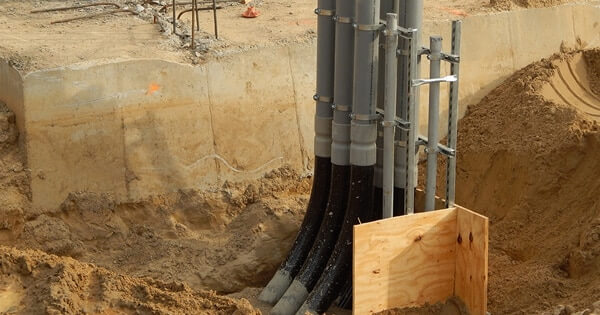
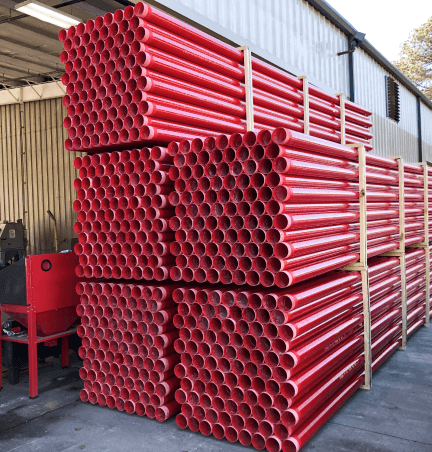
Protection of the cables and assets specific to data centers requires a durable, corrosion-resistant conduit system. Our cost-effective, American-made RTRC electrical conduit can be found in the data centers of the largest tech companies and telecommunications providers including software and search giants and microchip manufacturers.
Featured Video
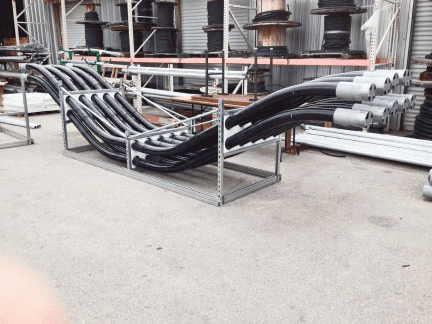
Champion Fiberglass’s lightweight, corrosion-resistant, “no burn through” elbows are the right choice for leading-edge data center engineering. They enable design flexibility without sacrificing strength, they fight corrosion, and their lightweight nature contributes to increased installation savings.
Elbow Calculator
Have a Data Center project in the works? Compare the material and installation costs of Champion Fiberglass elbows to other elbow material types by using the new Champion Elbow Calculator tool.
Why Use Fiberglass Conduit for Data Center Projects?
Characteristics like lack of burn-through, low coefficient of friction, and cable fault resistance make fiberglass conduit elbows an ideal solution to protect data center infrastructure.
Traditional materials including galvanized rigid steel, aluminum and PVC-coated steel conduit will weld wire to the inside of the conduit during fault conditions, while fiberglass conduit is not affected.
Fiberglass RTRC conduit is lightweight, making it easier to handle and transport and less labor intensive to install than traditional alternatives per the NECA Manual of Labor Rates.
Fiberglass conduit offers one of the lowest coefficients of friction available for conduit systems and is completely resistant to any of the current pulling lubricants’ corrosive properties. Keeping conduit intact means you don’t have to worry about damaged conduit and resulting repairs.
Innovative Solutions to Protect Data
It’s clear why some of the largest tech and telecommunications companies trust Champion Fiberglass® to safeguard data center infrastructure with RTRC conduit. In a recent data center build-out replacing galvanized rigid steel elbows with Champion Fiberglass elbows contributed to more than $400,000 in combined project savings.
Champion Fiberglass’s lightweight “no burn-through” fiberglass conduit elbows enable design flexibility without sacrificing strength and their lightweight nature contributes to increased installation savings.
Data Center Specifications
- Data center conduit is specified on three things: listing, cable protection and federal eligibility.
- Champion Duct® RTRC conduit answers all three.
- Listings: UL 2515 for above and below ground installation, UL 2420 for below ground, manufactured in accordance with NEC Article 355.
- Cable protection: Champion Fiberglass elbows eliminate burn-through, the abrasion that occurs when cable is pulled against the inner wall of a bend on dense runs.
- Handling: Approximately 15X lighter than PVC-coated steel, as published in the Champion Fiberglass Product Comparison Chart, which eases handling on overhead runs.
- Federal projects: Qualifies under the Build America, Buy America Act; conduit, elbows and fittings are manufactured in the United States and marked as such.
- Grounding: The conduit is non-conductive, so the raceway cannot become an unintended current path; grounding is carried by conductors sized to the NEC.
- Champion to confirm data center positioning): Where the electrical design calls for a fire-rated raceway on life-safety circuits such as emergency power and fire alarms, specify Champion Flame Shield® 2-hour fire-rated phenolic conduit, rated to UL 2196 at 1,850°F for two hours.
Featured Product
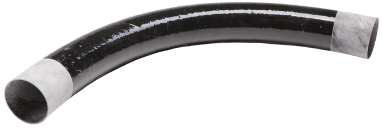
Champion
Fiberglass Elbows
Delivering labor-saving, no-burn-through fiberglass elbows, fast.
FAQs – below ground applications, industries, and usage
Yes. UL lists conduit by installation type rather than by industry, and Champion Duct® RTRC conduit is UL 2420 Listed for below-ground and UL 2515 Listed for above- and below-ground installations, which covers the underground duct banks common on data center campuses. Champion Fiberglass Elbows, available from 3/4″ to 12″, add no-burn-through construction for dense cable pulls. Champion conduit is also BABA-compliant under the Build America, Buy America Act and manufactured in the U.S.A.
For data center cable runs, Champion RTRC fiberglass conduit outperforms PVC on the points that drive pull quality. Fiberglass elbows do not burn through during cable pulls, while PVC elbows can. Its 0.38 coefficient of friction compares with 0.90 for PVC Schedule 40 and 80, allowing longer pulls with fewer pull boxes. Its operating range of -40°F to +230°F exceeds PVC’s +40°F to +150°F, and under fault conditions it will not weld wire to the conduit wall.
No additional conduit grounding is needed for fault protection. Because Champion RTRC fiberglass conduit is non-conductive, grounding bushings and exothermic grounding are not required to protect the raceway during a cable fault, and the conduit cannot become an unintended current path. Under fault conditions, fiberglass will not melt or weld wire to the conduit wall, so damaged cable in a data center duct bank can be pulled and replaced. Grounding of the circuits themselves is still set by the project’s electrical design and the NEC.
RELATED CASE STUDIES
Related White Papers
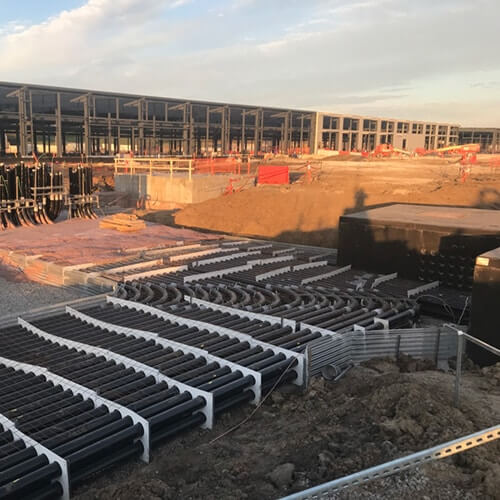
Project Photos
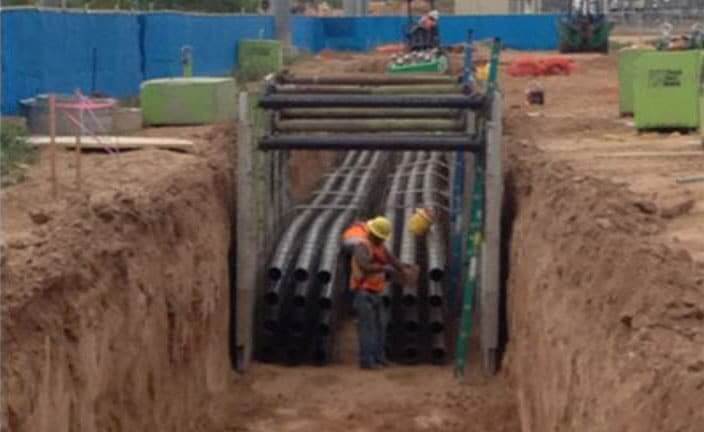
Cyrus One – Phoenix, AZ
GM Data Center – Milford, MI