







Fiberglass Conduit for Chemical Plants
When chemical plant projects call for a completely non-metallic conduit solution, Champion Fiberglass® is there with the answers. For a chemical plant system, it offers corrosion-resistant elbows & conduit bodies.
Application Overview
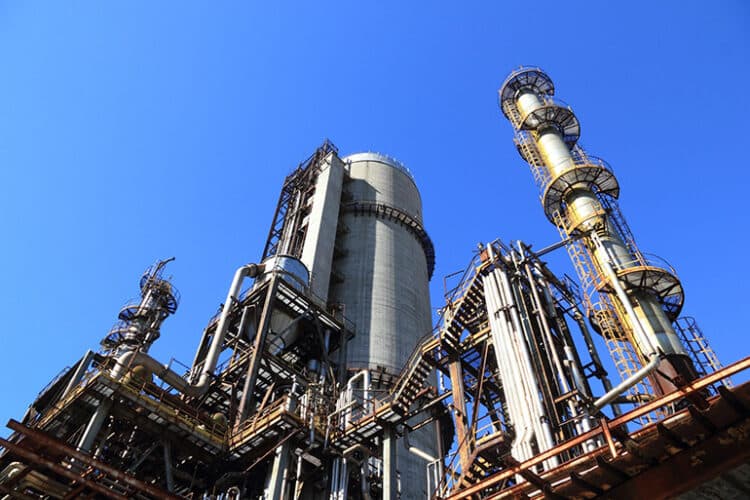
The often-hazardous industrial settings represented by chemical plant projects call for conduit that’s up to code, and up to withstanding even the most volatile environments. Champion Epoxy Haz Duct® XW Type Fiberglass Conduit is a Class I Div 2-rated conduit system that offers solid performance in chemical plant projects. This conduit is UL-2515 A Listed, and lightweight for smooth chemical plant installation without sacrificing strength.
Chemical Resistance Profile
- Chemical plant conduit from Champion Fiberglass is RTRC conduit that resists more than 70 chemicals across four groups: acids, including sulfuric acid; alkalis, including caustic soda; organic solvents; and oxidizers, including chlorine.
- The system is non-metallic throughout, making it an acid-resistant conduit in which exposure does not start the corrosion cycle that eventually separates coating from substrate on PVC-coated rigid steel.
- Where an area within the plant is classified as Class I Division 2, specify Champion Haz Duct® XW Type, the hazardous location conduit that carries that rating and a 0.25 in. wall.
- Haz Duct XW is not rated for Class I Division 1.
- The full chemical list is published in the Champion Fiberglass Chemical Resistance (SPI) Chart.
Featured Product
Champion
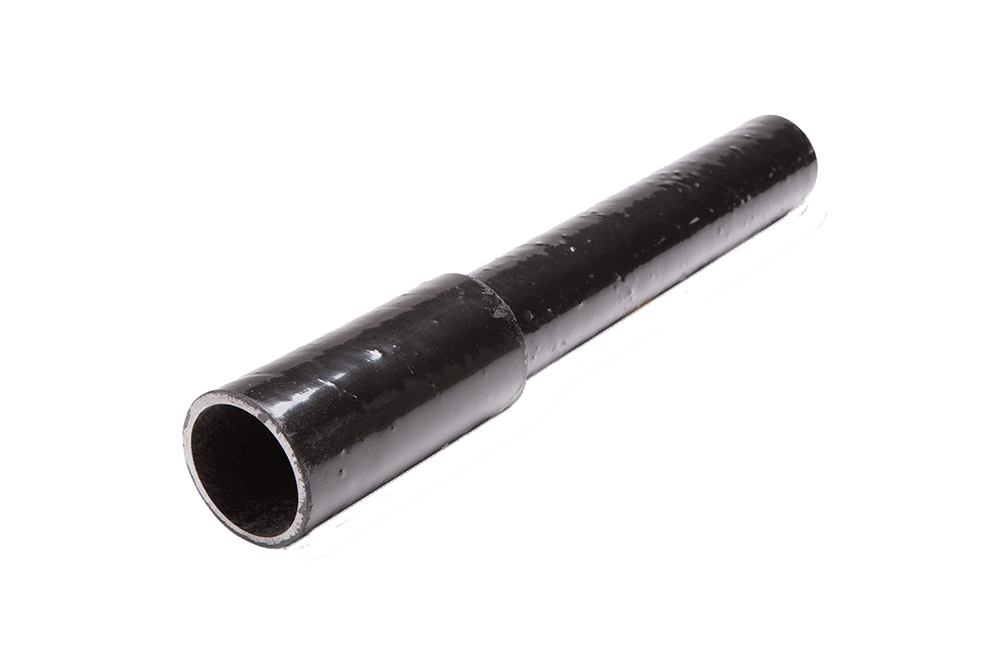
Haz Duct® XW Type
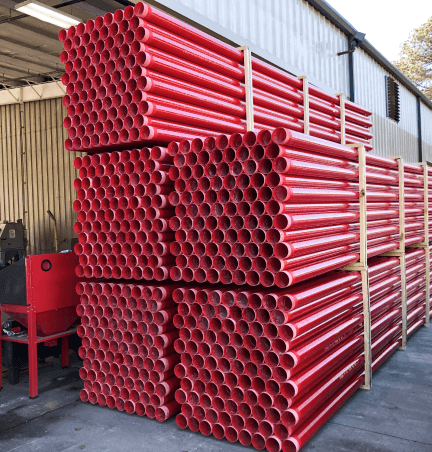
A complete non-metallic conduit solution that easily handles the demands of hazardous, corrosive industrial environments.
FAQs – below ground applications, industries, and usage
Epoxy RTRC fiberglass conduit is the Champion Fiberglass answer for acid and chemical plant exposure. Champion Haz Duct® XW offers the widest range of corrosion resistance and is NEC-approved for Class I, Division 2 areas, while Champion Duct® serves unclassified areas. Both are tested against hundreds of chemicals, and ratings for specific acids and concentrations are published in the Champion Chemical Resistance Guide, which should be checked against the plant’s process chemistry before specification.
Yes, with the right product. Standard fiberglass conduit is not permitted in Class I, Division 2 locations, but Champion Haz Duct® XW is approved by the National Electrical Code for Class I, Division 2 and Zone 1, Division 2 applications in the U.S., and by the Canadian Electrical Code for Zone 1, Division 2. The approval covers Division 2 only, not Class I, Division 1 locations. Haz Duct® XW has held NEC approval since 2008 and is UL 2515-A and UL 2420 Listed for chemical plant use.
Champion RTRC conduit combines filament-wound fiberglass with epoxy resin, giving it the broadest range of corrosion resistance of any in-market conduit material. It has been tested under strict protocols against hundreds of chemicals, with results published in the Champion Chemical Resistance (SPI) Chart, and it is completely resistant to the corrosive properties of current cable-pulling lubricants. Champion Duct® and Champion Haz Duct® XW share this epoxy chemistry, and Haz Duct® XW is resistant to sea water. [CLIENT INPUT: named chemical classes from the SPI Chart.]
Project Photos
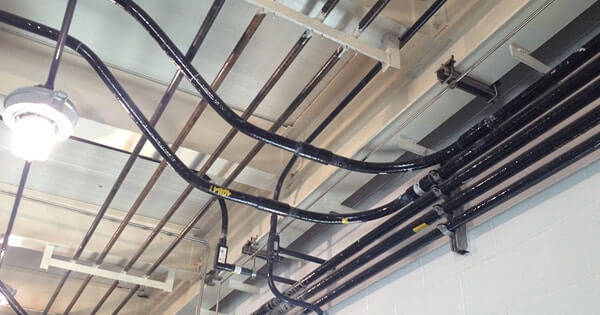
Chemical Plant -St. Louis, MO